>> New to restorative development?
- Begin with this helpful orientation
- See what an integrated utility hub could look like in Hennepin County, using organics as an example; 2018
Restorative development starts a path toward…
- More resilient, healthy, and equitable communities
- Built-in funding systems to replace restorative infrastructure and facilities
- All waste streams seen as valuable material resources
- Natural places that clean and cool our air
- Locally sourced nutrients for organic food and fuel for our vehicles
- Local water budget that provides for multiple uses
- Leaving future generations with a win-win balance between public and private sector benefits
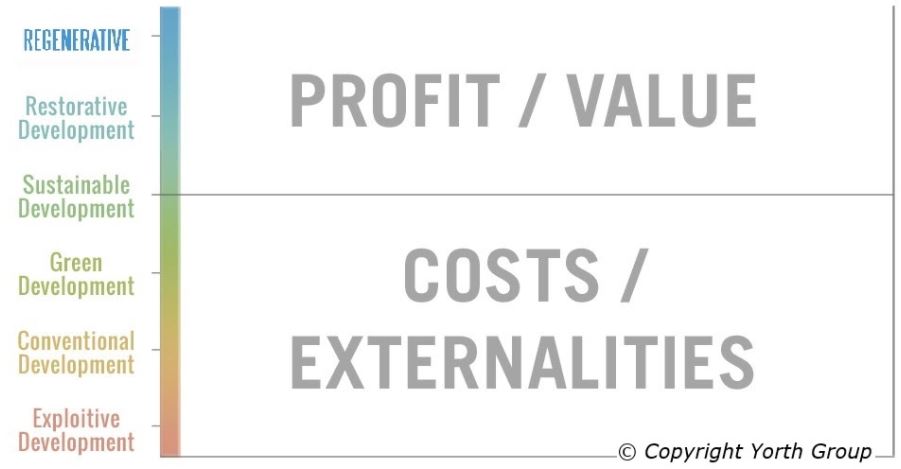
Stages along the pathway
1 Conventional Development: Linear, take-make-waste model; centralized, single function, siloed city management, sunk costs, and depleting capital.
3 Sustainable Development: Sustainable development is a neutral position. There are no negative or positive impacts measurable anywhere in the system.
2 Green Development: Produces net-negative outcomes. Characterized by incremental improvements. The goal is to reduce negative outcomes.
4 Restorative Development: Distributed and integrated infrastructure and governance; circular resource management, characterized by synergistic values, integration and equity generation.
Redefining waste as materials, inputs
Now: Current concept is waste; we build infrastructure that gets rid of waste as cheaply as possible
New restorative economy:
- Keeps products, components, and materials at their highest utility and value at all times
- Uses infrastructure that maximizes their quality
- Focuses on equity, which views:
- Marginalized populations as assets
- Stormwater as an asset
- Wastewater as an asset

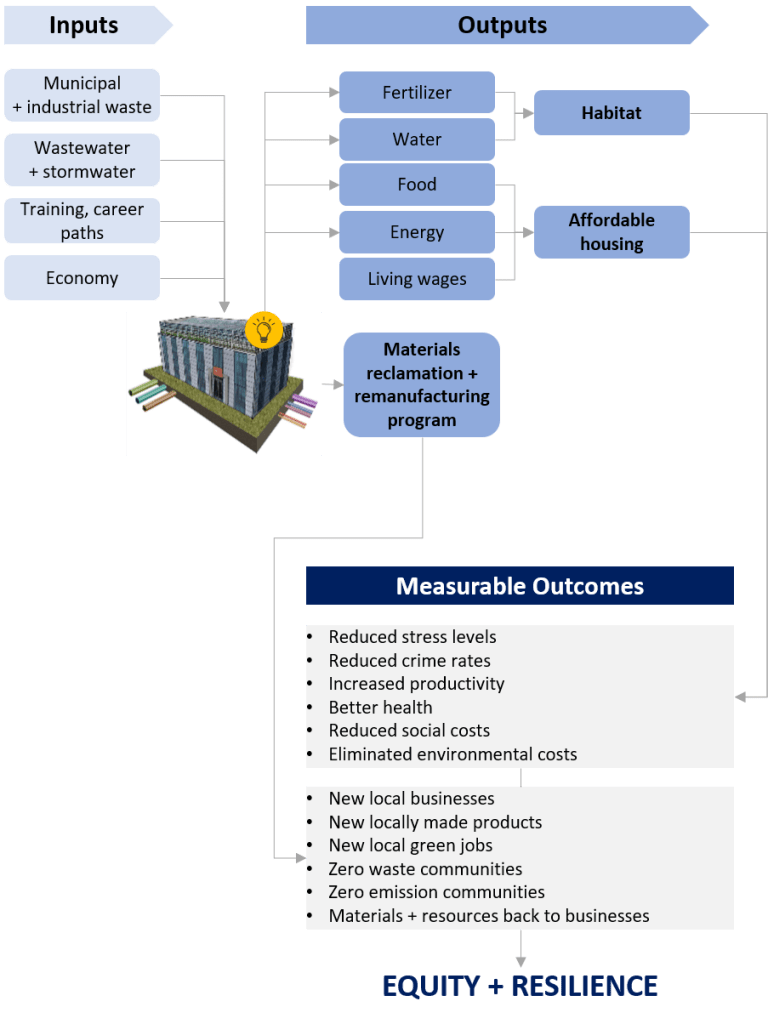
Inputs, Outputs, Outcomes

 Restorative Development Partnership